

Hanna Bergholm’s debut feature “Hatching” built its entire horror around a mother’s suffocating obsession with her daughter, literalized as a creature that hatches from an egg the daughter nurtures in secret. It was blunt, physical, and deeply uncomfortable in exactly the ways it intended. Her follow-up, “Nightborn,” which debuted on Shudder yesterday, aims for a similarly unsettling approach, though critics remain split over how successfully it delivers on that ambition.
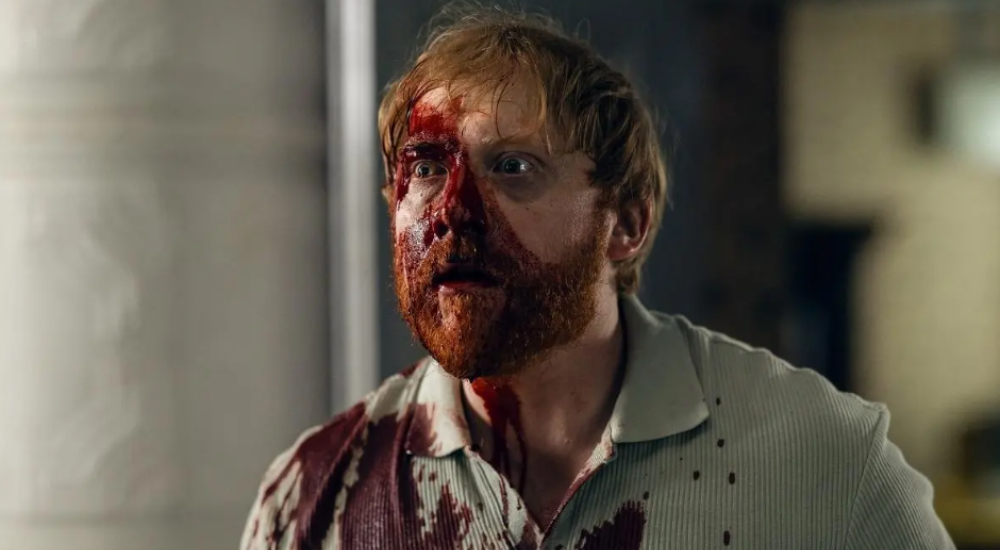
The film stars Seidi Haarla as Saga, a Finnish woman who moves with her British husband Jon (Rupert Grint) into the remote forest house where she grew up. She becomes pregnant under circumstances tied to the land’s folklore, and the baby that arrives — Kuura — carries something ancient and wrong with it. What follows is 92 minutes of postpartum dread, body horror, Finnish mythology, and the specific kind of exhaustion that turns new parenthood into something indistinguishable from a breakdown, all of it shot in a Finnish landscape that Surgeons of Horror called “a distinctive visual identity rarely seen in contemporary horror.”
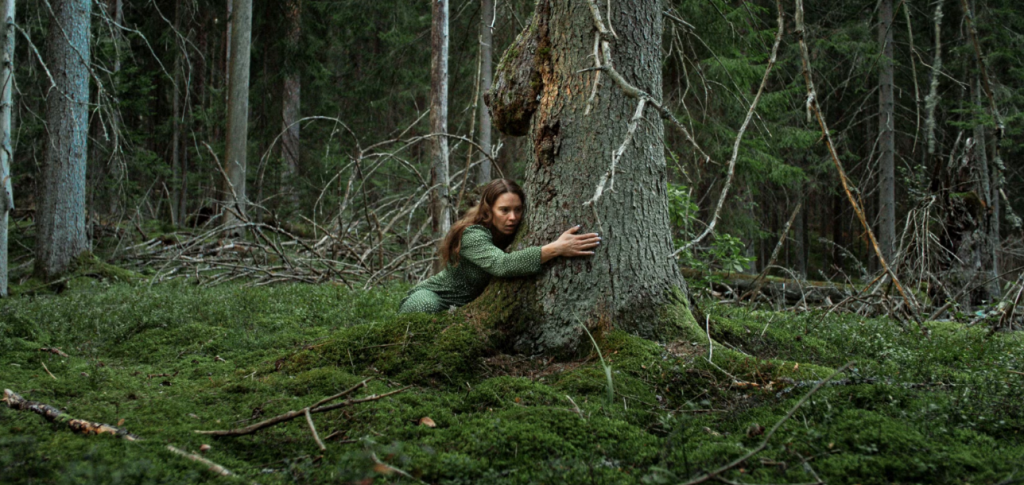
The film premiered at the Berlin International Film Festival in February and later won the Cheval Noir for Best Film and Outstanding Performance at Fantasia in Montreal — a genre crowd’s vote of confidence that helps explain how it arrived on Shudder with significant buzz attached. Rue Morgue was fully on board, calling it “ambitious, empathetic and downright unsettling in its depictions of motherhood and isolation,” and framing Bergholm as a filmmaker continuing to dismantle the concept of the perfect nuclear family in ways few directors are currently attempting.
Not everyone agrees. RogerEbert.com‘s Peyton Robinson’s review praised Grint — calling him the film’s grounding force, delivering “both tenderness and overstimulated frustration” with ease — but argued that Haarla’s performance as Saga is inconsistent, at times producing exactly the kind of cathartic animal energy the film needs, and at others coming “completely unmoored.” In Review Online was harder still, placing the film in the lineage of “Titane” and “The Substance” before arguing it “strains the body-horror-as-psychological-metaphor approach” those films carried off — finding “Nightborn” too literal where they were sharp, and too tonally undecided to generate sustained dread.
Heaven of Horror landed on the more generous end, comparing Haarla’s ferocity to Toni Collette in “Hereditary” and calling it a transcendent performance — the same assessment the Fantasia jury apparently shared. IndieWire‘s David Ehrlich took a more sideways approach, describing the film as “silly-serious and blood-spattered” and concluding it half-works in spite of itself — held together by the parental instinct at its core, which Ehrlich argued lands even through the film’s excesses. B-Sides & Badlands described the film as a sharp exploration of folk horror’s roots infused with a contemporary edge, arguing that its strengths firmly establish it within the genre despite its shortcomings.
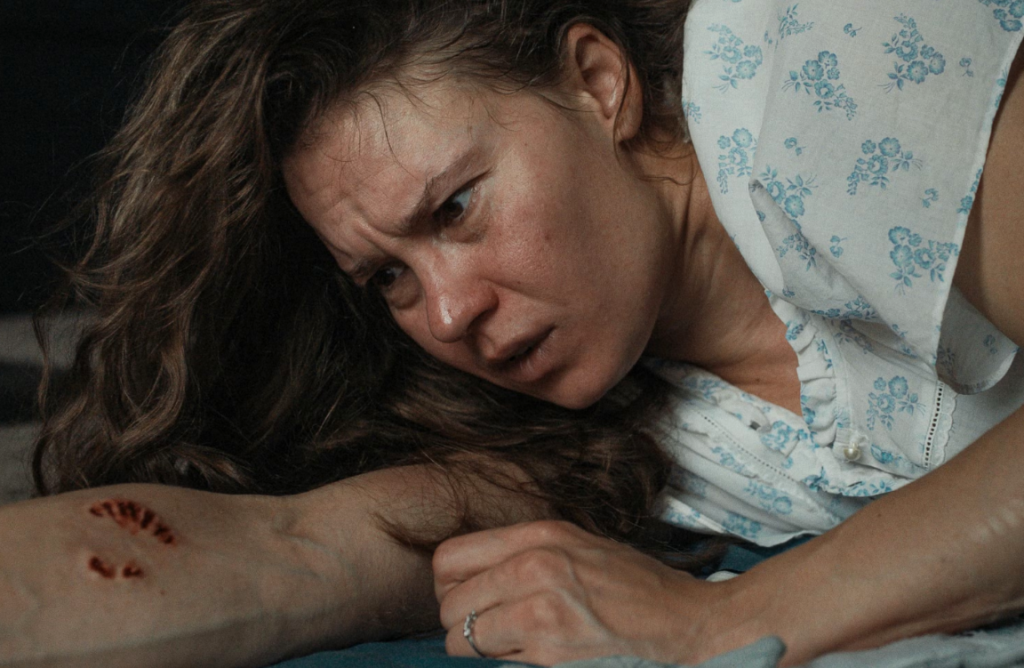
The split in those responses traces back to a tension built into the film’s structure. Bergholm is working in the tradition of maternal horror — “Rosemary’s Baby,” “The Babadook,” “Nightbitch” — where the horror is never cleanly supernatural but always the externalization of something the main character is actually feeling: fear, resentment, exhaustion, love. When the film commits to that interiority, it works. When it leans on its folklore mechanics as a plot engine, several reviewers felt it lost the thread. HorrorFuel put it most directly: the film is as much about the horrors of being seen as merely a vessel — by a husband, a culture, a folklore tradition — as it is about anything a baby does in the night.
“Nightborn” is streaming now on Shudder. The runtime is 92 minutes, and the film is in English for most of its running time, with some Finnish dialogue.
