
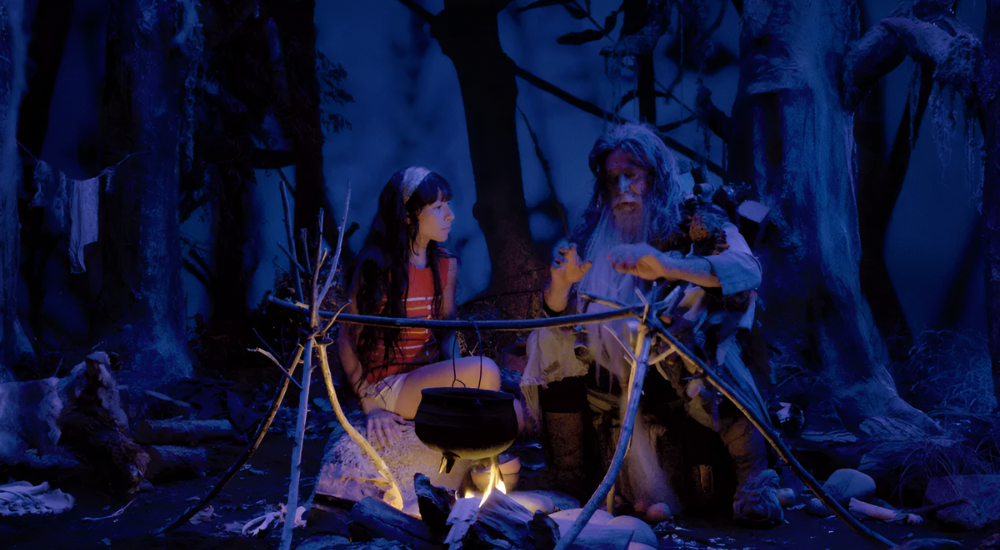

Chilean filmmakers Cristóbal León and Joaquín Cociña have a habit of making the medium itself part of the story. Their third feature, “Donkey Princess,” premiered in the main International Competition at this year’s Locarno Film Festival, and critics who caught it there describe a film that keeps shifting shape almost as much as its characters do.
A Familiar Fairytale, Retold in Chile
The film draws loosely from “Donkeyskin,” the centuries-old French fairytale most famously adapted by Jacques Demy in 1970. IndieWire’s review lays out the setup: Diana, played by Antonia Giesen, is a princess left suffocated by her father’s grief-driven obsession with her following the death of her mother. The household keeps a prized donkey close at hand — a detail borrowed directly from the source material, where the animal’s hide becomes central to the princess’s escape.
León and Cociña relocate the story to their native Chile, staged as a kind of medieval fantasy kingdom. Moveable Fest’s review describes King Arthur — played by Francisco Melo in what turns out to be one of several incarnations of the character — as a monarch who answers to no one, left bereft after his wife’s death and determined to protect Diana from ever experiencing the kind of heartbreak he’s living through, even if that means refusing to let her fall in love at all.
A Journey Across Worlds
According to TMDB’s plot summary, the King’s ban on love becomes the film’s inciting event: when Diana falls for a man named Lalo, her father banishes him, and Diana uses a magical bracelet to travel across other worlds in search of him. That device gives León and Cociña room to indulge the kind of genre- and format-hopping they’ve built a reputation on, with the film sliding between animation and live-action rather than settling into one visual language.
Moveable Fest’s review draws a comparison to the late Marjane Satrapi’s live-action debut “Chicken with Plums,” pointing to a shared use of saturated pastel color to bridge the uncanny gap between a filmmaker’s animated instincts and a live-action frame. That review calls the film ambitious and well-executed enough to leave you wishing the directors had more resources to work with, while still crediting “Donkey Princess” with the same handmade charm and outsized imagination that defined their earlier films.
Directors Building a Distinct Body of Work
León and Cociña first drew wide attention with 2018’s stop-motion horror film “The Wolf House,” followed by “The Hyperboreans,” which played Cannes’ Directors’ Fortnight. ICS’s Locarno review frames “Donkey Princess” as further proof the pair are building one of the more genuinely exciting bodies of work in contemporary cinema, arguing that both “The Wolf House” and “The Hyperboreans” already rank among the most original films of the decade before this one even entered the conversation.
That same review is candid about the film resisting easy interpretation, noting that its style and structure are deliberately blurred and that its meaning is never made fully explicit — a choice the review frames as intentional rather than a shortcoming, leaving room for different viewers to read the film’s central relationships in different ways.
Where the Story Gets Complicated
Not every element of the film has landed cleanly with critics. ICS’s review points to a structural trade-off: the film’s central trio of characters are defined largely by their circumstances rather than by strong, distinct personalities of their own — a choice that keeps an otherwise potentially tangled narrative easy to follow, even as it limits how much interior life those characters get.
Variety’s review, published from Locarno, describes the film as an inventive, shape-shifting take on an adult fairytale — one that starts out whimsical before growing steadily more sober as it goes, tracking a tonal shift that mirrors Diana’s own journey away from her father’s kingdom.
A Darker Companion to Demy’s Version
IndieWire’s review draws a direct line to Demy’s earlier adaptation, noting that where his 1970 film leaned into pastel-hued musical whimsy, León and Cociña strip out any musical element and lean instead into a darker, though no less visually striking, register — while pointedly hoping audiences won’t find themselves sympathizing with the more troubling elements of the original fairytale’s incestuous king figure, elements the new film chooses to confront rather than soften.
The Bottom Line
“Donkey Princess” arrives as a film built for viewers willing to sit with ambiguity rather than a tidy resolution — a fairytale retelling that trades Demy’s candy-colored optimism for something stranger and more unresolved, anchored by two filmmakers whose commitment to handmade, genre-blending visual storytelling continues to set them apart. Bendita Film Sales, which picked up international rights ahead of the Locarno premiere, will be looking to build on the film’s festival reception as it seeks wider distribution.
“Donkey Princess” premiered in competition at the Locarno Film Festival, with a wider release yet to be announced.
