
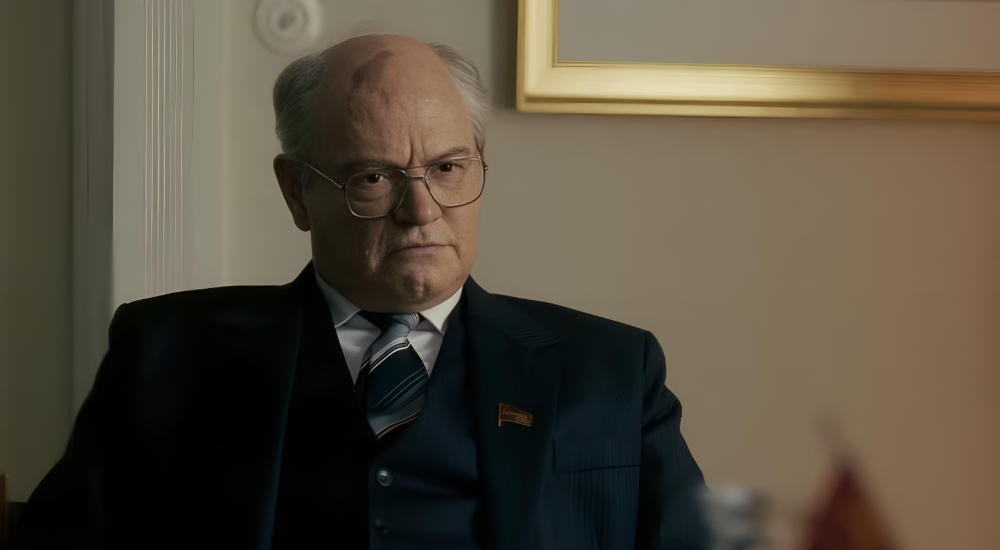

Angel Studios has built its reputation on faith-inflected crowd-pleasers, so a two-hour drama about arms-control negotiations in a Reykjavik parlor is, on paper, a strange fit for the studio’s slate. “The Brink of War,” which opened in roughly 2,000 theaters today, turns out to be exactly that gamble: a talky, historically dense chamber piece dressed up as counterprogramming against the summer’s usual sequels and dinosaurs, and critics have been genuinely split on whether it pulls the trick off.
Jeff Daniels plays Ronald Reagan opposite Jared Harris as Mikhail Gorbachev, with J.K. Simmons as Secretary of State George Shultz rounding out the film’s real center of gravity. Writer-director Michael Russell Gunn, making his feature debut, built the script from declassified summit transcripts, and it shows in the dialogue’s specificity, even when critics disagreed on whether that specificity translates into drama. Variety’s review called the result “dutifully drab,” singling out Branka Katić’s performance as Raisa Gorbachev as the one element with real spark, while criticizing the film’s back half for glossing over the inconvenient fact that the actual 1986 summit ended without an agreement, folding that failure into the cleaner triumph of the arms treaty signed the following year.
Not every critic came away as cold. RedCarpetCrash’s review landed somewhere in the middle, praising the “sharp dialogue and commanding performances” of Daniels and Harris while flagging what it called an oversimplified political framing that keeps the film from becoming the definitive account of Reykjavik it might have been. Plugged In, which reviews films through a family-audience lens, found more to like than not, describing it as an interesting film likely to find an appreciative audience, while flagging some strong language for parents weighing whether to bring kids.
The politics of the portrayal itself became its own subplot in the film’s critical reception. SLUG Magazine’s review argued the film inflates the stakes of the actual 1986 summit for dramatic effect and leans into what the outlet called a deification of Reagan, calling some of the dialogue melodramatic even as it credited the film for landing marginally closer to the historical record than past dramatizations of the same events. On the other end, PJ Media, a conservative commentary outlet, went in skeptical, given that Daniels has been vocal about his liberal politics off-screen, and came away pleasantly surprised, arguing the film treats Reagan fairly rather than using the role as a vehicle for a takedown. The Washington Examiner’s review went further still, comparing the summit’s mystery and back-and-forth negotiating to an Agatha Christie plot and framing Reykjavik, despite its lack of a signed agreement, as the turning point that set up the following year’s arms treaty.
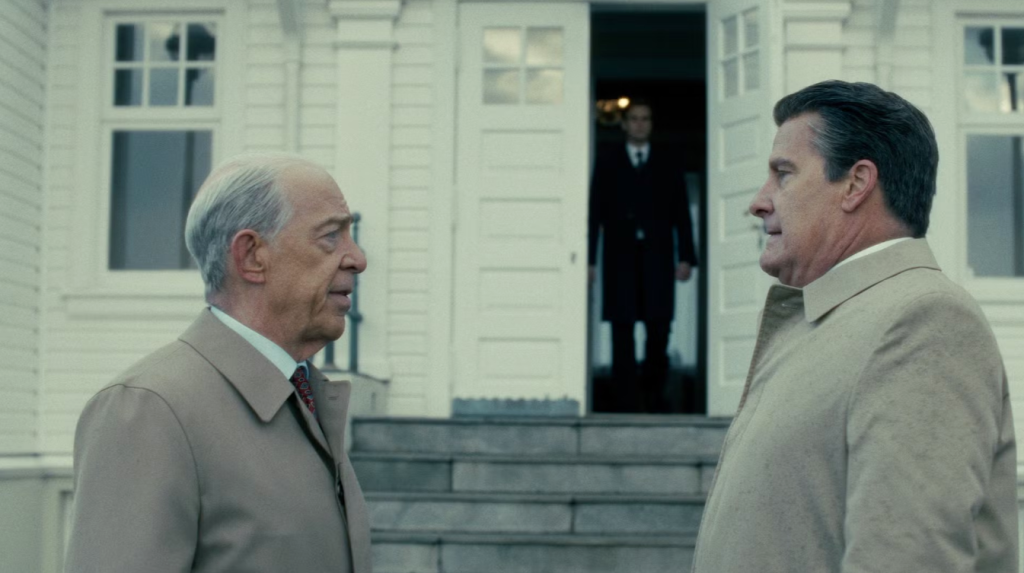
Production-wise, Gunn shot much of the film on location at Höfði, the actual house where the 1986 summit took place, after securing it from the city of Reykjavík, along with additional filming around the Blue Lagoon and Iceland’s Reykjanes peninsula, according to production notes on Wikipedia. That commitment to the real setting lines up with Gunn’s own framing of the project. Speaking at Angel’s CinemaCon presentation earlier this year, Gunn described the film as being about the courage required to sit across the table from an adversary and choose a different future, positioning it as a natural fit for a studio built around stories meant to unite audiences rather than divide them.
Angel is opening “The Brink of War” wide against a crowded weekend that also includes “The End of Oak Street” and “The Rivals of Amziah King,” with industry trackers projecting a modest opening in the mid-single-digit millions, well below the near-$20 million debut of the studio’s earlier 2026 release, “Young Washington,” according to box office forecasting cited by Deadline. Whatever its commercial ceiling, “The Brink of War” arrives as a rare studio release willing to bet that two men arguing about nuclear stockpiles for two hours can still hold a theater’s attention.
