
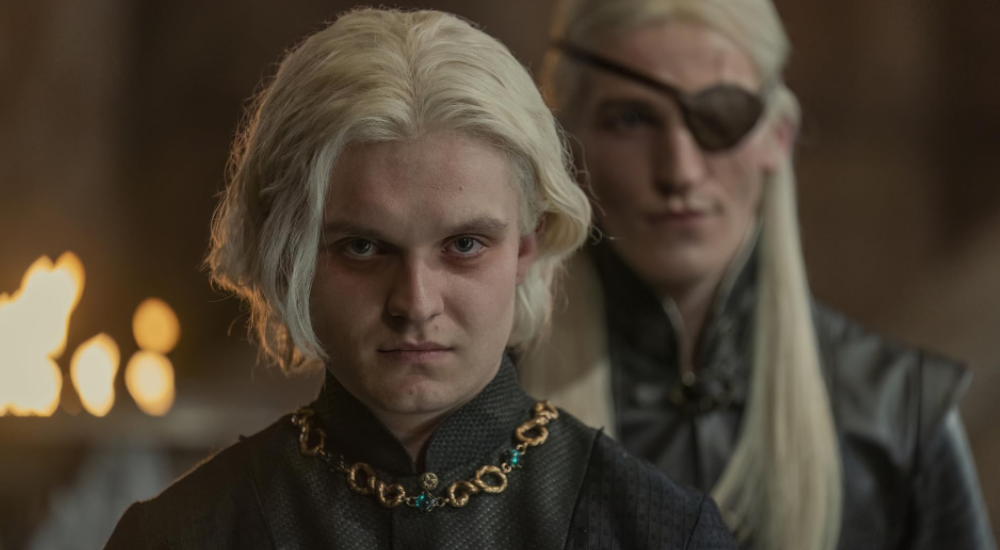

The Targaryen civil war known as the Dance of the Dragons has always been about power, dragons, and broken family bonds. But beneath the surface-level bloodshed, House of the Dragon has been methodically weaving in something far more consequential: Aegon the Conqueror’s prophetic dream, known as “The Song of Ice and Fire.” While the show introduced this vision early, Season 3 is quietly layering new details and emotional weight onto it, setting the stage for what could be another major reveal about the prophecy’s true scope and its connection to future events in the Game of Thrones timeline.
This isn’t a loud, exposition-heavy twist. Instead, the series is using subtle character moments, visions, and motivations to deepen the lore. The result is a richer tapestry that ties the prequel directly to the larger A Song of Ice and Fire saga while raising fresh questions about destiny, sacrifice, and who the true “Prince That Was Promised” really is.
The Foundation: Aegon’s Dream and Its Introduction
In Season 1, King Viserys I Targaryen shares a closely guarded family secret with his daughter and heir, Rhaenyra. He explains that Aegon the Conqueror was not driven solely by ambition when he united the Seven Kingdoms. Instead, he was motivated by a prophetic dream of a terrible winter “gusting out of the distant north” that would bring “absolute darkness” and threaten to destroy the world of the living.
Viserys tells Rhaenyra that only a Targaryen seated on the Iron Throne, strong enough to unite the realm, could stand against this threat. Aegon called this vision “The Song of Ice and Fire,” and the knowledge has been passed from ruler to heir ever since. This single scene, reportedly suggested by George R.R. Martin himself, retroactively reframes Aegon’s conquest as an act of preservation rather than pure domination.
The prophecy immediately creates dramatic irony. Alicent Hightower later misinterprets Viserys’ dying words — in which he repeats the name “Aegon” — as a command to crown her son Aegon II. In reality, Viserys was referring to Aegon the Conqueror and the dream. This misunderstanding ignites the Dance of the Dragons. The original prophecy explanation and its early impact were covered in detail by Yahoo Entertainment.
The Valyrian steel dagger that plays a recurring role is also inscribed with the prophecy’s key line: “From my blood come the Prince That Was Promised, and his will be the Song of Ice and Fire.”
Seasons 1–2: Building the Prophecy’s Emotional Stakes

Throughout the early seasons, the prophecy simmers rather than explodes. It adds tragic weight to Rhaenyra’s claim and explains why certain Targaryens feel a higher calling beyond the Iron Throne. Daemon Targaryen’s arc in Season 2 takes this further when he experiences a series of haunting visions at Harrenhal. One vision stands out: a silver-haired girl in a desert with three newly hatched dragons at her breast. Daemon interprets this as confirmation of the Prince (or Princess) That Was Promised.
These visions do more than provide spectacle. They force Daemon to confront his own role in the larger story and ultimately realign his loyalty toward Rhaenyra. The show uses these moments to suggest that the prophecy is not just ancient history — it is actively shaping decisions in the present.
By the end of Season 2, the prophecy has already influenced multiple character trajectories. It gives Rhaenyra a sense of destiny beyond personal revenge and provides Daemon with a renewed sense of purpose after his earlier wavering.
Season 3: The Prophecy Becomes a Catalyst for Action
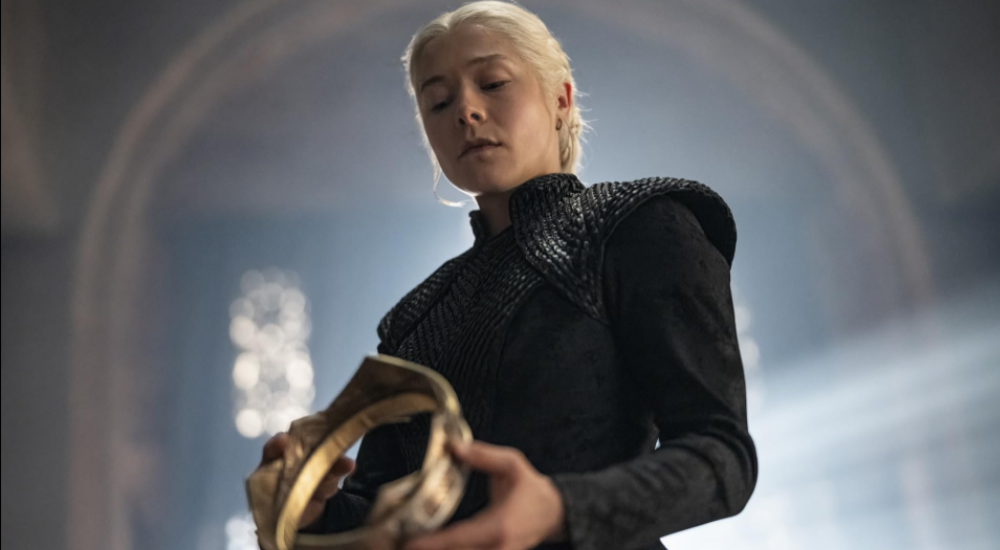
Season 3 takes the prophecy from background motivation to active plot driver. After the devastating loss of her son Jacaerys at the Battle of the Gullet, a grief-stricken Rhaenyra withdraws. It is Daemon who pulls her back into the fight — not with battlefield strategy alone, but by reminding her of the vision he witnessed.
In a pivotal Season 3, Episode 2 scene, Daemon tells Rhaenyra (in High Valyrian) about the girl with silver hair and dragons at her breast. He makes it clear that this future savior can only come into existence and fulfill her role if Rhaenyra secures the Iron Throne. This key development and its emotional weight on Rhaenyra were analyzed by Screen Rant.
This revelation gives Rhaenyra the resolve to mount her dragon and claim King’s Landing. She takes the city and begins her reign with the weight of prophecy on her shoulders. The show portrays this not as pure political victory, but as a solemn duty to protect a future that neither she nor Daemon will live to see.
The approach is remarkably subtle. There are no dramatic musical swells or lengthy monologues spelling out every implication.
The Daenerys Connection and Canon Implications
By directly linking Daemon’s vision to Daenerys Targaryen, House of the Dragon Season 3 makes one of its boldest canon adjustments yet. The show positions Daenerys as the key figure who will eventually unite the realm against the threat from the North. This adds emotional resonance to Rhaenyra’s struggle but also creates tension with Game of Thrones’ ending.
This layering represents the “another Aegon Prophecy Reveal” currently unfolding. Coverage from ComicBook.com highlighted how Daenerys’ shadow now looms over the entire Dance.
What Could the Next Reveal Involve?
Several possibilities remain open for future episodes or seasons. One theory gaining traction involves the ancient Green Men of the Isle of Faces. A subtle Season 3 Easter egg involving these mysterious figures has led some to speculate they possess deeper knowledge of the prophecy. This angle was explored by Screen Rant.
Another avenue is how (or if) the secret will be passed to the next generation. Some fans wonder whether the prophecy dies with Rhaenyra’s line or reaches Rhaegar Targaryen through other means.
There is also the question of the Prince That Was Promised’s true identity. While House of the Dragon heavily implies Daenerys, Game of Thrones left room for Jon Snow. Future reveals could reconcile or complicate this further. How this prophecy might affect Rhaenyra’s character arc was discussed by Screen Rant.
Broader Impact on Characters and Lore
The prophecy is already changing how viewers perceive Rhaenyra. What might have looked like standard political ambition now carries the weight of religious or prophetic fervor. Some analyses suggest her arc in Season 3 reflects a growing “fanaticism” around the dream.
For Daemon, the visions represent a form of redemption and clarity. On a lore level, the show has successfully made Aegon’s dream feel like a living, breathing force. This major retcon and its potential book implications were examined in depth by Screen Rant.
Tying Into Game of Thrones and the Books
The prophecy’s addition was always intended to strengthen the bridge between House of the Dragon and the original series. A thoughtful piece from ComicBook.com explored why Aegon’s dream might not have been referenced in the original Game of Thrones series.
Whether this element will appear in The Winds of Winter remains uncertain, but many fans hope Martin incorporates it. Time magazine also examined how the prophecy retroactively changes our understanding of later Targaryen history.
A Prophecy That Keeps Giving
House of the Dragon Season 3 demonstrates the power of patient storytelling. Rather than rushing to explain every detail of Aegon’s dream, the writers have allowed it to unfold organically through character actions and quiet conversations.
By using Daemon’s vision of Daenerys as the emotional spark for Rhaenyra’s decisive move on King’s Landing, the show has added another rich layer. It transforms the Dance of the Dragons from a simple succession crisis into the first chapter of a much larger war for the survival of humanity.
As the series continues, expect more subtle reveals — perhaps involving the Green Men or how the prophecy reaches later generations. The foundation has already been laid carefully and deliberately. In House of the Dragon, the Song of Ice and Fire is still being written — one carefully placed note at a time.
